Parking in Seville: blue, green and MAR zones, prices and traps
On-street parking in Seville is not charged by the hour: it is charged in steps, and each zone caps how long you can stay. Rates, paying hours, car parks and the traps that only visitors fall into.
Seville does not ban cars: it makes them expensive and slow in the centre, which comes to much the same thing. Street parking is charged in steps, Sundays are free, and during Holy Week the old town is closed off for whole days at a time.
If you are picking up a hire car at the airport or driving in from elsewhere in Spain, here are the published rates, with their year and source. And also what the council does not publish: the amount of the fines, the number of disabled spaces and the opening hours of the event car parks.
Each pin is a named car park on OpenStreetMap. Tap it, then Go: the route opens in driving mode.
What do the three regulated zones cost?
Regulated parking is split into three zones, and the difference is not just the price. It is the maximum time you are allowed to stay: the more central the zone, the shorter the stay.
| Zone | Maximum stay | Rate |
|---|---|---|
| Blue (centre, high turnover) | 2 hrs | €0.45 for 35 minutes and €1.70 for 120 minutes |
| Green (residential) | 3 hrs | €0.65 for 60 minutes and €2.00 for 180 minutes |
| MAR (heavy traffic) | 1 hr | €0.60 for 35 minutes and €1.25 for 60 minutes |
An hour in the blue zone comes to about €0.75 or €0.85, depending on where the step falls. That is not an average: it is the real range produced by a system that charges in 35-minute slices rather than round hours.
When do you pay, and when is it free?
- Monday to Friday: 9:00 to 14:00 and 17:00 to 20:00.
- Saturdays: 10:00 to 14:00.
- Sundays and public holidays: free, no ticket and no checks.
- Summer afternoons: several mobility guides say the afternoon slot stops being charged in July and August. The rule is not republished every year, so read the machine before relying on it.
One exception causes more confusion than any other, and it is worth understanding properly because it costs money.
The council mobility notice lists "Holy Week afternoons" as an exempt period. Several information websites sum this up as the blue zone being free for the whole of Holy Week, which is not the same thing.
The official text only mentions afternoons. Mornings are still charged at normal hours. Anyone who parks at eleven in the morning on Holy Wednesday trusting that shortcut risks a perfectly valid fine.
Residents versus visitors: the imbalance that explains the system
- Annual resident permit: €79.90 a year.
- Resident in the blue zone: €0.90 a day or part of a day.
- Resident in the green zone: €1.60 a week.
A local pays for a whole year what a visitor can spend in four or five days of central parking. That gap is not a flaw in the system: it is the point of it. The street is kept for the people who live there, and outsiders are encouraged to leave the car before they arrive.
Why is there no single price list for underground car parks?
In the wider city, a full day underground costs between €7.50 and €12. Right in the centre the range rises to between €15 and €25 a day.
These are real examples taken from booking platforms, not a municipal rate:
- INSUR Cartuja: about €10 a day, €30 for three days.
- Virgen del Rocío Hospital: €7.60 to €9 a day, €25 for three days.
- AUSSA Rafael Salgado: about €10 a day, €22 for two days.
- Autobús del Prado (coaches): €0.75 an hour, 30 coach bays.
Diario de Sevilla counted ten municipal car parks with seven different price lists. Anyone who works out a budget from a single example will get it wrong, and nearly always on the low side.
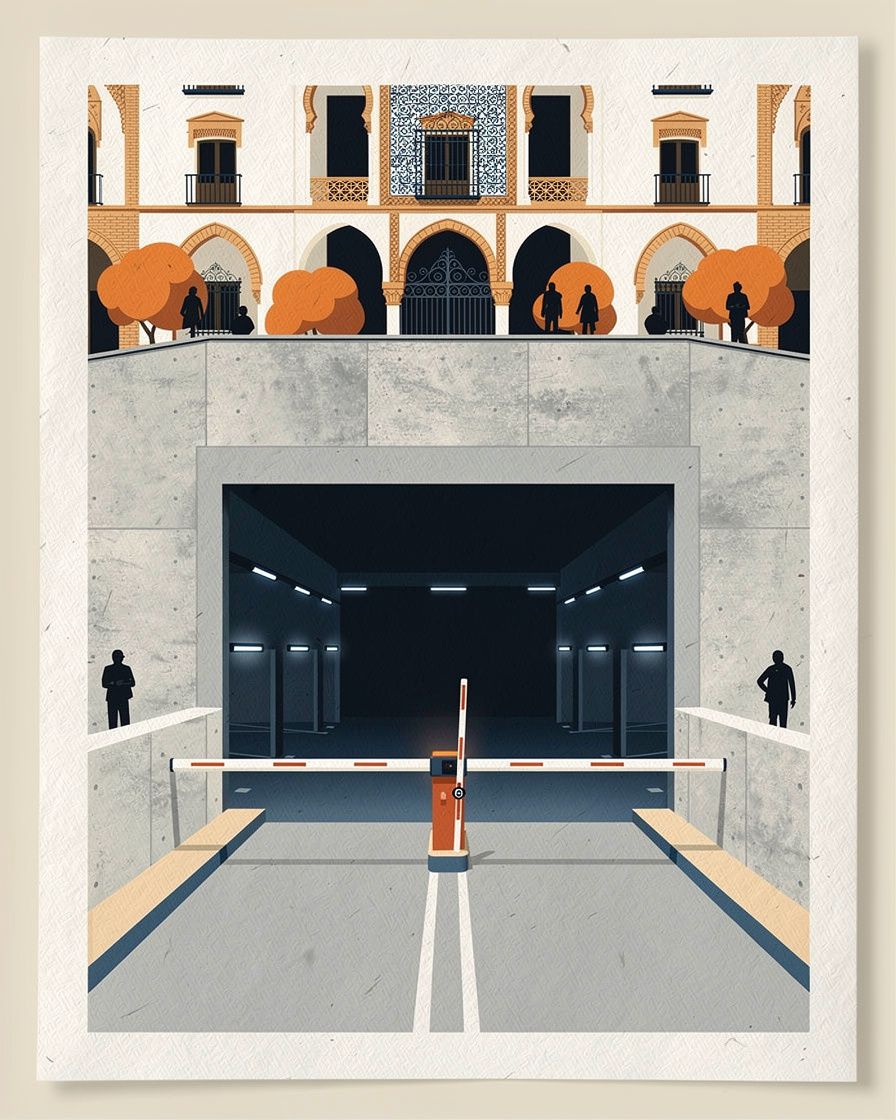
The sum hardly anyone does: if you are staying three days, parking will cost you between €25 and €75. A hotel with a space included, or simply a hotel ten minutes' walk from the centre in an area where the street is green rather than blue, changes the whole calculation. Compare accommodation with that cost already added, not afterwards.
Compare places to stay in Seville on Booking.com →Affiliate link: booking through it helps keep this guide going, and costs you nothing extra.Holy Week and the Feria: a separate chapter
During Holy Week, access to the old town is restricted between 10:00 and 2:00 the following morning, and only residents with a registered garage, emergency services, public transport, vehicles of people with reduced mobility and hotel guests with a prior booking can drive in.
La Campana is closed completely from Tuesday 24 March at 10:00 until Easter Sunday. The streets on the official route and the adjoining ones are closed two hours before the brotherhood passes.
For those who insist on bringing the car, there are event passes. For Holy Week, the local press quotes €120 for ten days, from the Friday of Sorrows to Easter Sunday. For the Feria, passes ranged between €104.99 for the P-1 car park and €180 for P-6.
Add an event pass, the odd day in a car park and regulated street parking in the mornings, and a week with a car easily reaches between €120 and €200 for a single vehicle. It is the figure that never appears in the brochures.
The five most expensive traps
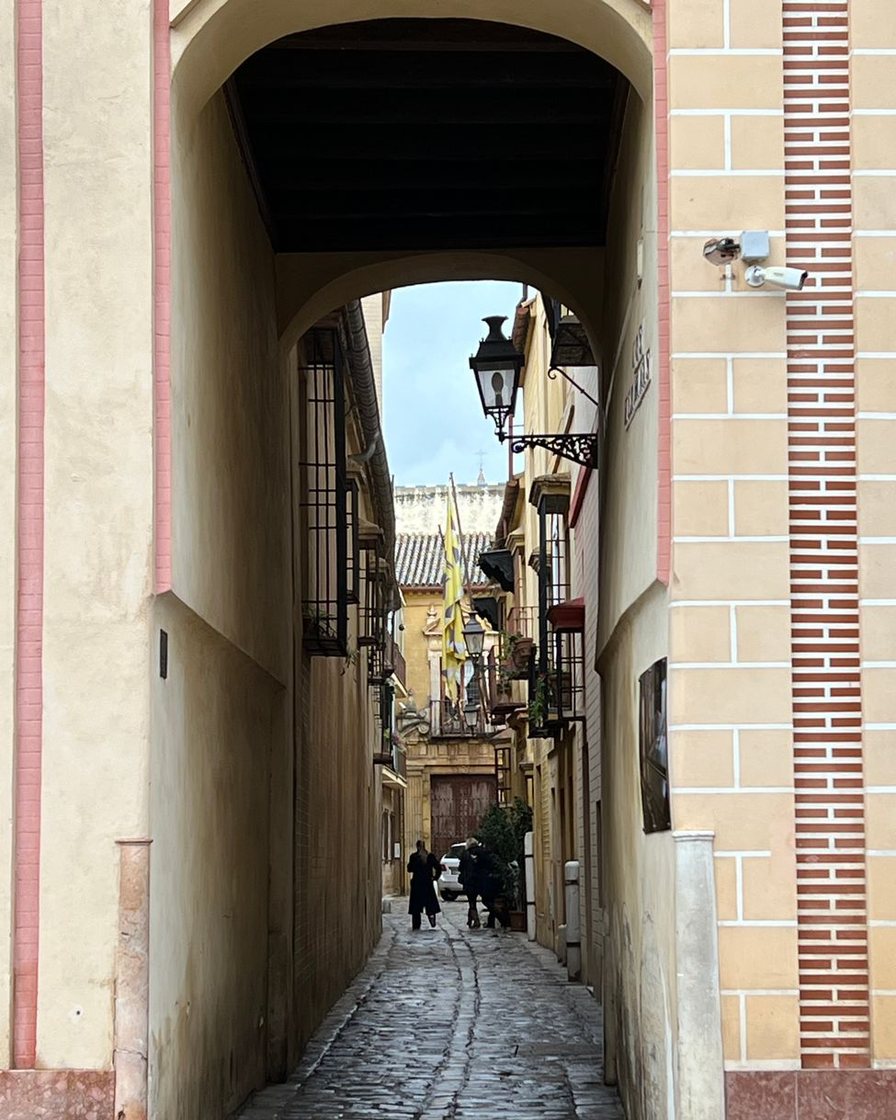
- Following the satnav all the way. It takes you into old-town streets with controlled access. For the last stretch, follow the car park signs, not the app.
- Bringing the parking app you use at home. On-street parking here runs on local systems such as Apparkya. The usual Europe-wide apps do not work, and the car ends up parked without paying without the driver knowing.
- Believing Holy Week is entirely free. According to the council text, only afternoons are exempt. Mornings are not.
- Looking for a free space near the centre. During paying hours there practically are none, and driving round costs more in time and fuel than a car park.
- Booking a space without checking the access. A paid space does not guarantee you can reach it: closures for processions are decided on the spot and block entire streets.
A disabled parking card exempts you from paying anywhere in the regulated zone, as long as it is displayed behind the windscreen. It is one of the few rules that is clearly published.
Unpublished, but worth knowing
Not everything can be told in figures, and saying where they are missing is part of the information. On these four points there is no official data available.
- The exact amount of the fines for overstaying or not paying. The guides talk about "penalties" without putting a figure on them.
- The number and spread of disabled spaces by district or zone. They exist, but there is no public count or map.
- The opening hours of the Holy Week event car parks: the price of the pass is published, not whether you can get out in the small hours.
- Whether the local apps accept foreign cards. There is no list of accepted payment networks.
If you plan to get around a lot, the realistic answer is not parking, it is not needing it: see what the metro, tram and bus cost and where the park-and-ride car parks are. To place the zones on a map, there is the map of the centre and its districts.
If you are coming for Holy Week: a car is simply in the way, because the centre is closed for days and event passes cost more than many hotel nights. What makes the trip is sleeping on the right side of the closures, and that gets booked months in advance.
See places available for the peak dates →Affiliate link: booking through it helps keep this guide going, and costs you nothing extra.Sources
- Seville City Council, sevilla.org: mobility notice published in the Provincial Official Gazette (2025) and Holy Week 2026 special mobility plan.
- TraficoTest, Wikidriver, Zona-azul.es and Centrumparkeren: blue, green and MAR zone rate sheets, 2026 edition.
- Apparkya: regulated parking in Seville and parking in the centre (2024).
- Parclick: Seville car park listings, updated in 2026 on a 2017 base.
- ABC de Sevilla: car park price infographic (2018) and Holy Week parking passes (March 2026).
- Diario de Sevilla: ten municipal car parks with seven price lists (2026).
- Okdiario: prices of the 2024 April Fair passes.
- Seville Provincial Council: Holy Week security and mobility plan.
On-street and car park rates change by council decision and without notice. This page is reviewed whenever an official price list changes.
Frequently asked questions
How much does it cost to park for an hour in central Seville?
Is parking free in Seville on Sundays?
Is the blue zone free for the whole of Holy Week?
How much does an underground car park cost per day in Seville?

Marta Bermúdez
Marta spent five years on the front desk of a hotel in the centre, answering the same questions about parking and the metro every day. She writes the pages she would have liked to hand to her guests. She checks every fare on the operator's website, never in a guidebook.