Getting around Seville: metro, tram, bus and what each one costs
Seville is a walking city, but not all of it. TUSSAM, metro and regional bus fares, actual timetables, the travel card that cuts the fare by four, the airport bus and what changes during Holy Week.

Central Seville is best done on foot, and that is the short answer. The long one is that the airport, the railway station, Nervión, Los Remedios and Triana are not round the corner, and that the price of a journey varies by a factor of four depending on whether you have a travel card.
If you are flying in, your very first fare, the airport bus, is the most expensive one in the city. This page brings together the published fares with their year, the real hours of each mode, and the point no guide explains: why the single ticket is the worst deal in town.
Why does a single bus or tram ticket cost four times as much?
TUSSAM runs the city buses and the Metrocentro tram, at the same fare. And that is where the difference that decides your week's budget comes in.
- Single ticket on board: €1.40.
- With a multi-journey card, no change: €0.35.
- With a multi-journey card, with a change within one hour: €0.38.
- With the Consorcio card, city journey: €0.76.
- 30-day card: €17.70.
A journey with a card costs a quarter of a single ticket. Four journeys a day for three days come to €16.80 paying on board and €4.20 with a card: the difference pays for the card itself several times over.
There is one awkward practical limit. The Consorcio card cannot be bought online from abroad, so you have to get it when you arrive, at kiosks, transport offices or stations. It is the first thing to sort out on your trip, not the last.
When is the tourist card not worth it?
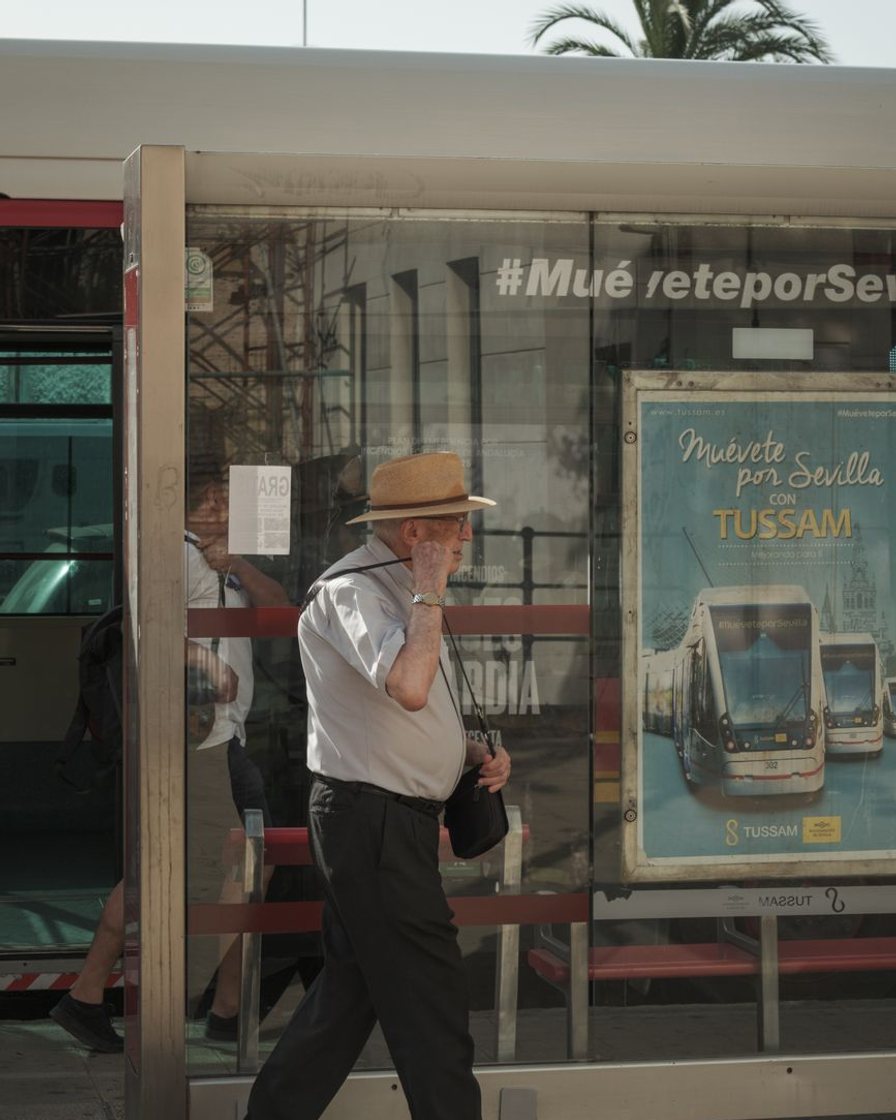
TUSSAM sells a tourist card at €5 for one day and €10 for three days. It pays off if you make a lot of journeys in a row, but it is worth knowing what it does not cover before you buy it.
It does not include the airport line or every metro zone. Many visitors find out too late that the trip in from the airport, plus the odd metro ride, leaves the card only half paid off.
For 2026, TUSSAM's municipal budget plans to raise the bonobús to €0.85 per journey. The price of the single ticket for that same year does not appear in any accessible document, so we do not take it for granted.
The metro: one line, three zones and long hours
The Seville metro has a single line, L1, and works by zones. Its hours are among the most generous in Spain for a city of its size.
- Monday to Thursday: from 6:30 to 23:00.
- Fridays and the eve of public holidays: from 6:30 to 2:00.
- Saturdays: from 7:30 to 2:00.
- Sundays and public holidays: from 7:30 to 23:00.
The single ticket published on the metro website is €1.80 for one zone, €3.20 for two zones and €3.60 for three zones. Check the machine's screen before paying.
Why we say so: the 2023 and 2024 price lists gave between €1.35 and €1.50 for a single zone, and the jump to the current amounts is not explained in any public notice. We do not know whether these are two different products or an unannounced increase.
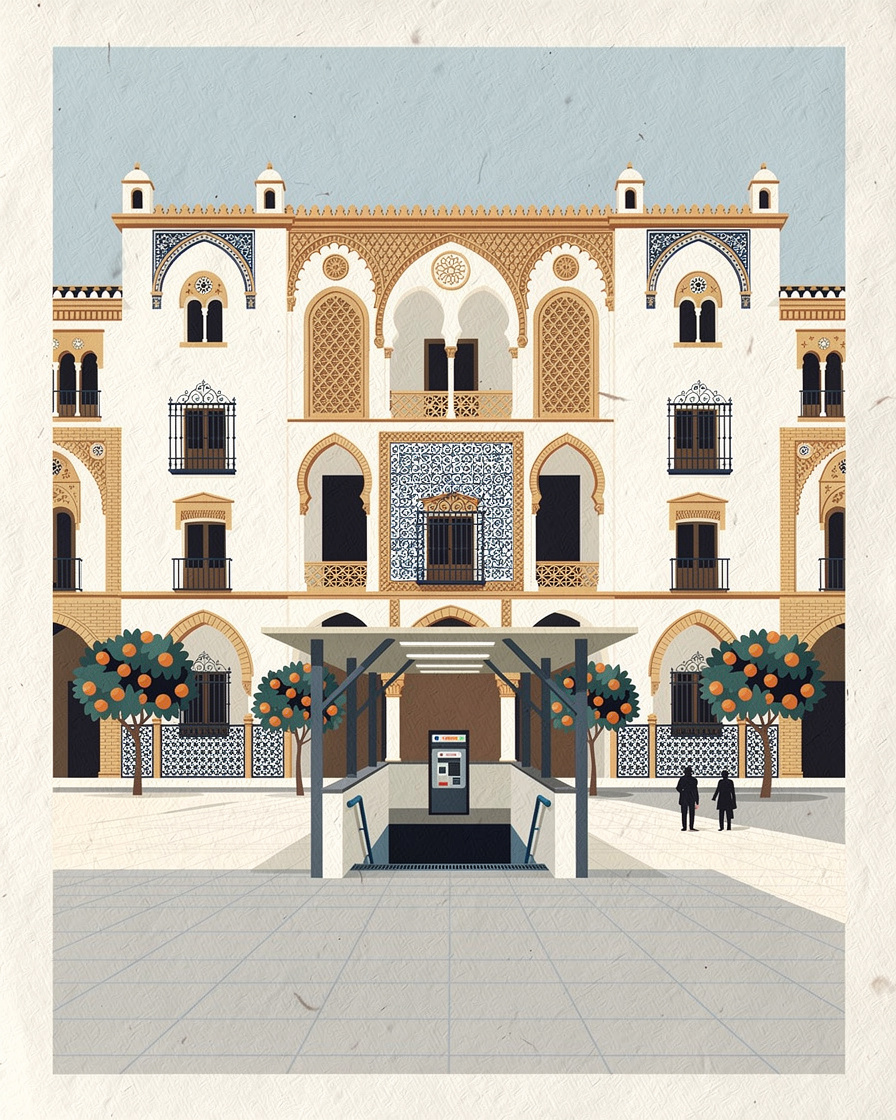
Where you sleep decides how much you travel. Staying inside the old town, or in San Bernardo, where metro, tram and local trains meet, can save two or three journeys a day for your whole stay. Compare prices by looking at the nearest stop too, not just the photo of the room.
Compare places to stay in Seville on Booking.com →Affiliate link: booking through it helps keep this guide going, and costs you nothing extra.The regional bus, for getting out of the city
The Consorcio buses are priced by fare bands, not by kilometre. Band 0 costs €1.55 for a single ticket and €1.01 with a travel card, and from there it rises step by step to €3.80 for band 5.
For 2026, the Consorcio applies a 40% discount on the card fare. With it, band 0 drops to €0.61 and band 5 to €1.88: a trip to a village in the province costs less than a coffee.
The airport: the only journey that costs a lot
The special EA line links the airport with the centre, and it is the exception to everything above. The ticket costs €6 per journey, four times a city fare and seventeen times a journey on a card.
It is not included in the tourist card. Two people there and back is €24, which is the number to keep in mind before comparing with a taxi.
Holy Week: more service and less room
During Holy Week, TUSSAM steps up its service by around 20% compared with a normal week, and runs longer hours.
- Service starts: at 6:00 on Holy Monday, Tuesday and Wednesday, and at 7:00 on the other days.
- Daytime service ends on most radial lines: between 1:00 and 1:15.
- La Madrugá (the night of Maundy Thursday into Good Friday): non-stop night service on some lines.
- EA line: last departure at 2:00 from Archivo de Indias, except during La Madrugá, when it does not stop.
The extra service does not solve the overcrowding. In the centre, in Triana and in Nervión it is common to see several full buses go past in a row, and the real wait is far longer than the theoretical frequency.
And there is an even more annoying information problem. Closures are decided on the spot as the brotherhoods advance, and general navigation apps do not pick them up in time: they send you to stops that do not exist that day.
Questions with no official answer
Four reasonable questions that have no official answer in Seville today, and it is worth knowing that they do not.
- Contactless payment on board. There is no public confirmation that every bus accepts bank cards. Be ready to pay in cash or with a travel card.
- The full list of metro passes. Amounts of €18, €25.20 and €30 appear without it being clear which ticket each one matches.
- The amount of the fines for travelling without a ticket or driving in a restricted zone.
- The share of the fleet that is accessible and the reliability of the metro lifts. The target is stated, the figure is not published.
If you are going to combine a car with public transport, first look at the park-and-ride car parks and what they really cost, or go straight to the blue, green and MAR zone rates. To get the official maps, there is the transport map guide, and to place districts and distances, the map of the centre.
In Holy Week, transport stops being the main problem: the walk from where you sleep to where you want to watch the brotherhood go by is, because lines are diverted and the closures change every day. Sleeping inside the area you care about is worth more than any pass, and those rooms sell out months ahead.
See places available for the peak dates →Affiliate link: booking through it helps keep this guide going, and costs you nothing extra.Sources
- TUSSAM: fare table published in the Provincial Official Gazette (2024), 2024-2025 student card campaign and TUSSAM's municipal budget for 2026.
- Consorcio de Transportes de Andalucía: regional bus fare table updated on 1 December 2024, with the discount column for 2026.
- Metro de Sevilla: timetable and fares page, tickets section, consulted in 2026.
- Seville City Council, sevilla.org: Holy Week special mobility plan 2024 and 2026.
- El Correo de Andalucía: getting around in Holy Week, public transport and road closures (2024).
- ABC de Sevilla: Holy Week service information.
- Visita Sevilla: Transport in Seville leaflet, 2024 edition.
TUSSAM and Consorcio fares are approved by annual resolution. This page is reviewed whenever an official fare table changes.
Frequently asked questions
How much is the bus in Seville?
What time does the Seville metro close?
How much is the bus from Seville airport to the city centre?
Is the TUSSAM tourist card worth it?

Marta Bermúdez
Marta spent five years on the front desk of a hotel in the centre, answering the same questions about parking and the metro every day. She writes the pages she would have liked to hand to her guests. She checks every fare on the operator's website, never in a guidebook.