Driving to Seville: motorways, drive times by city, the real cost and where to leave the car
The drive to Seville is simple: four motorways lead into the city. The hard part starts on the ring road, when you have to choose which side to enter by and where to leave the car. This guide puts figures on both.
Most English-speaking visitors fly into Seville. This page is for those who drive: with a hire car picked up in another Spanish city, or in their own car all the way down through France.
Getting to Seville by car is easy as far as the ring road, and complicated after that. Four motorways bring in traffic from all over Spain; the real problem is crossing the city and finding somewhere to leave the car, above all during Holy Week.
This guide gives the time at the wheel from each city, what the trip really costs and how to get in without crossing the centre. The comparison with the train, the plane and the coach is in the general guide on how to get to Seville.
Which motorway do you take from each city?
| From | Motorway | At the wheel | Door to door |
|---|---|---|---|
| Madrid | A-4 | Between 5 h 15 and 5 h 45 | 6 h 30 to 8 h |
| Córdoba | A-4 | Between 1 h 25 and 1 h 45 | 2 h to 3 h 30 |
| Málaga | A-92 | Between 2 h 25 and 2 h 50 | 3 h 30 to 5 h |
| Granada | A-92 | Between 2 h 45 and 3 h 15 | 4 h to 5 h 30 |
| Cádiz | AP-4 or A-4 | Between 1 h 20 and 1 h 40 | 2 h to 3 h 30 |
| Huelva | A-49 | Between 1 h and 1 h 20 | 1 h 45 to 3 h |
| Barcelona | A-7 and A-92, or A-2 and A-4 | Between 9 h 30 and 11 h | 11 h to 14 h |
These are road orders of magnitude, not an official scale, and the sources do not agree. For Madrid, another estimate quoted in the how-to-get-there guide gives about 5 hours; for Málaga, between 2 h and 2 h 30. Door to door adds breaks, traffic jams on the way out of Madrid and into Córdoba and Seville, and the hunt for a space.
From Cádiz, the AP-4 is usually the most direct road. The sources consulted do not publish a reliable 2026 toll price: check before you leave, because the A-4 is the alternative with no doubt about it.
How long does it take from France?
From Toulouse, the drive takes between 8 h 30 and 9 h 30 at the wheel, and from Paris between 16 h 30 and 18 h 30, without an overnight stop. Bordeaux is 10 to 11 hours away, Marseille 11 to 12 h 30 and Lyon 13 to 14 h 30.
Driving Paris to Seville in one day is technically possible, but it does not get you into the centre at a predictable hour. With a night halfway, the trip becomes reasonable.
How much does the drive really cost?
Fuel from Madrid to Seville comes to between €55 and €90 for a car using 5.5 to 7.5 litres per 100 km, at 2026 prices. From Bordeaux, the range rises to between €120 and €190.
These are estimates from the research file, not official statistics. Tolls range from nothing to a hundred euros or more depending on the route, and parking is added the moment you arrive.
A covered car park in the centre runs to about €20 to €35 for 24 hours, according to a 2026 market range. Other sources give between €15 and €25 a day in 2024, and between €7.50 and €12 in some underground car parks in 2026: there is no single municipal price list.
With a car, choose your accommodation for its access, not only for its neighbourhood. A hotel with its own parking, or close to the ring road, saves you paying for a city-centre car park every night and crossing the old town with a loaded car.
See places to stay with parking in Seville →Affiliate link: booking through it helps keep this guide going, and costs you nothing extra.Which side of the city should you enter by?
The advice the local press repeats most is to choose your side of arrival in advance, north, south, east or west, depending on where you are sleeping. Crossing the historic centre by car is slow, with pedestrian stretches and temporary restrictions.
Sat nav does not always know about those restrictions: it may suggest a closed street or a route that cuts across a procession. The safest option is to leave the car at the edge of the old town and finish on foot, by metro or by bus, as the guide to getting around Seville explains.
The prices for the blue, green and MAR parking zones, and the traps in each, are in the guide to parking in Seville. The free options, with their limits, are in the one on where to park for free in Seville.
What changes during Holy Week?
The car is the hardest hit. During Holy Week (Semana Santa) 2026, the old town was closed to traffic between 10:00 and 2:00 the following morning, and La Campana was closed off from Tuesday 24 March at 10:00 until Easter Sunday.
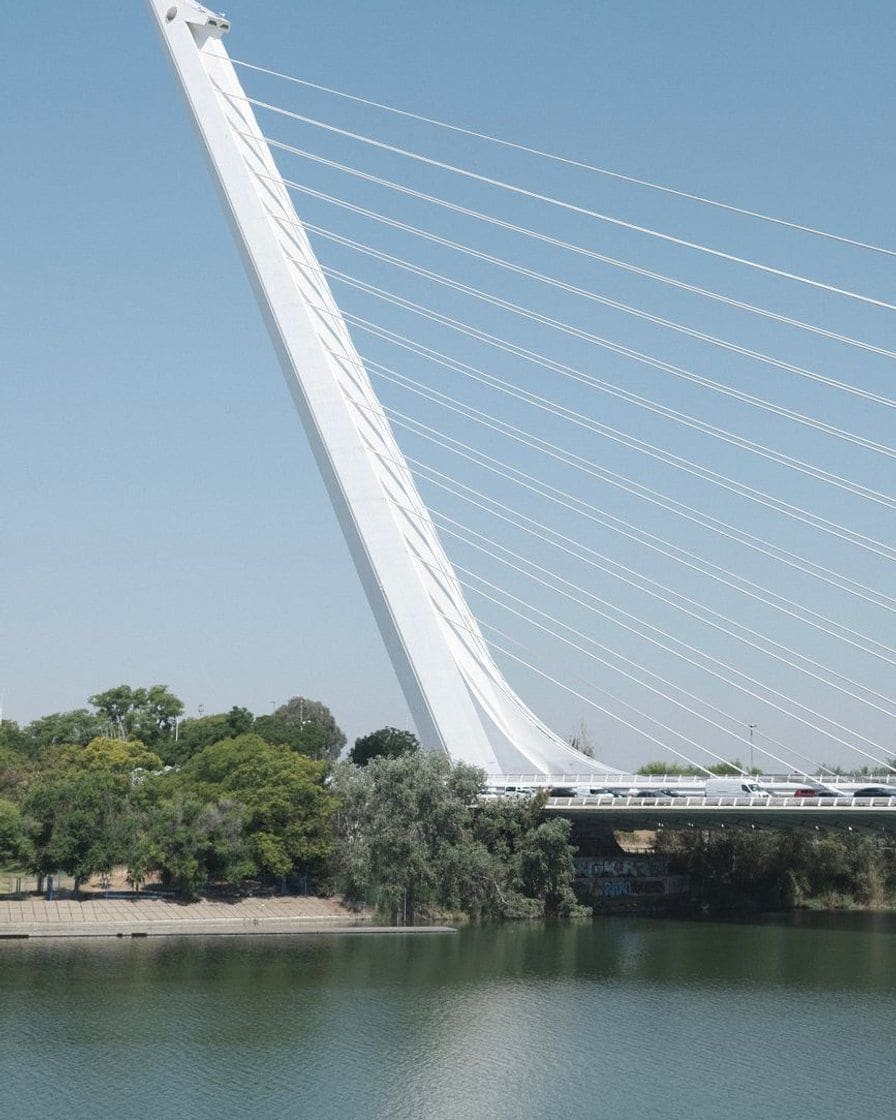
The 2026 mobility plan opened a car park next to the Blas Infante metro station with 1,200 spaces, with no published forecast of how full it would be. Other park-and-ride areas, by La Cartuja, the Charco de la Pava and the Alamillo Bridge, are 10 to 25 minutes from the centre by public transport or on foot.
Booking a hotel in the centre does not give you the right to drive up to it. Ask the hotel for its procedure: an authorised number plate, or a drop-off point outside the cordon. The guide to park-and-ride car parks in Seville covers each one.
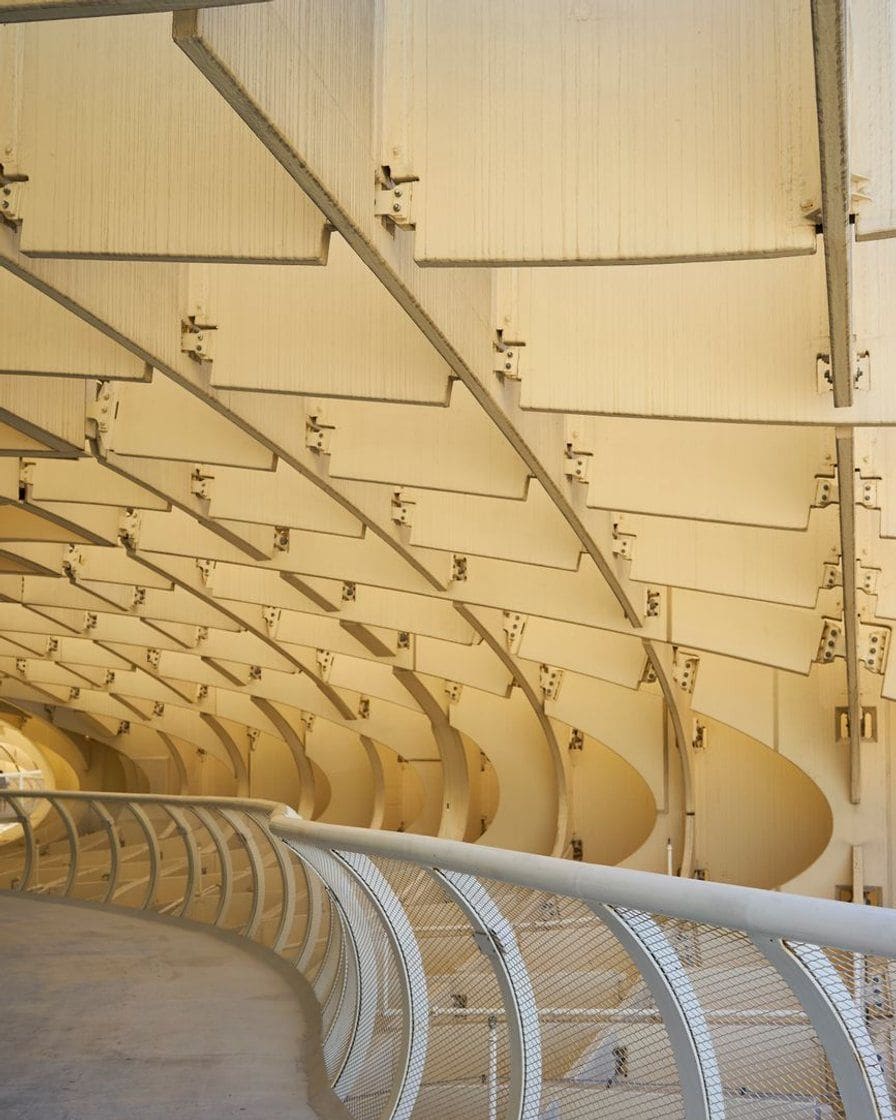
During Holy Week, what matters is sleeping on the side of the city you arrive from, near a metro stop. That way the car stays parked for the whole stay and you never have to cross the closed streets.
See places to stay in Seville for Holy Week →Affiliate link: booking through it helps keep this guide going, and costs you nothing extra.Still unpublished
- The 2026 toll price on the AP-4, which the sources consulted do not give reliably.
- A single municipal table of parking prices: car parks charge by the hour, by the day or by booking, depending on the operator.
- Expected occupancy of the Holy Week car parks: capacity is published, not whether there will be space at a given time.
- The list of hotels reachable by car during the processions: you have to ask each one.
Sources
- Seville City Council: special Holy Week 2026 mobility plan and the Blas Infante car park.
- Diario de Sevilla: getting around Seville during Holy Week 2026, advice on choosing your side of arrival.
- Wikidriver: parking in Seville during Holy Week, journey times from the outlying car parks, 2026.
- sevilla-365 research file, September 2026: road times and fuel and parking estimates.
- This site's guides on getting to Seville and parking in Seville: Madrid and Málaga estimates, 2024 and 2026 parking prices.
Frequently asked questions
How long is the drive from Madrid to Seville?
How much does it cost to drive from Madrid to Seville?
Can you drive into the centre of Seville during Holy Week?
Where should you leave the car when you arrive in Seville?
Rocío Delgado
Rocío grew up in the San Lorenzo neighbourhood and follows Holy Week from the madrugá, not from the stands. She knows the corners where you can watch a paso go by without waiting three hours, and the streets that close without warning. She never recommends a spot she has not stood in herself.