The best photos of Holy Week in Seville: which scenes, at what time and from where
The most widely shared photos of Holy Week in Seville make it look as if you only have to turn up. Not so: the good spots are taken hours in advance and the light is in charge. This page sorts scenes, times and places.
The best photos of Holy Week (Semana Santa) in Seville almost always come from four scenes: a brotherhood leaving its church at sunset, the float brushing the balconies of a narrow street, the area around the cathedral and the night of the Madrugá. None of them is achieved by turning up at the time in the programme.
This page sorts those scenes by time slot and by crowd level, says what makes the shot harder and what is already known about the 2027 edition. There is no official ranking of the best photos or the best spots: what follows are criteria, not a league table.
Which scenes make the best photos?
- Leaving the church: the float (the paso) coming through the doorway, with the local crowd in front. It is free, but it fills up very early.
- The narrow streets: the float almost touching the façades, where you can hear the foreman. These are the stretches of the return route, away from the official route (the Carrera Oficial).
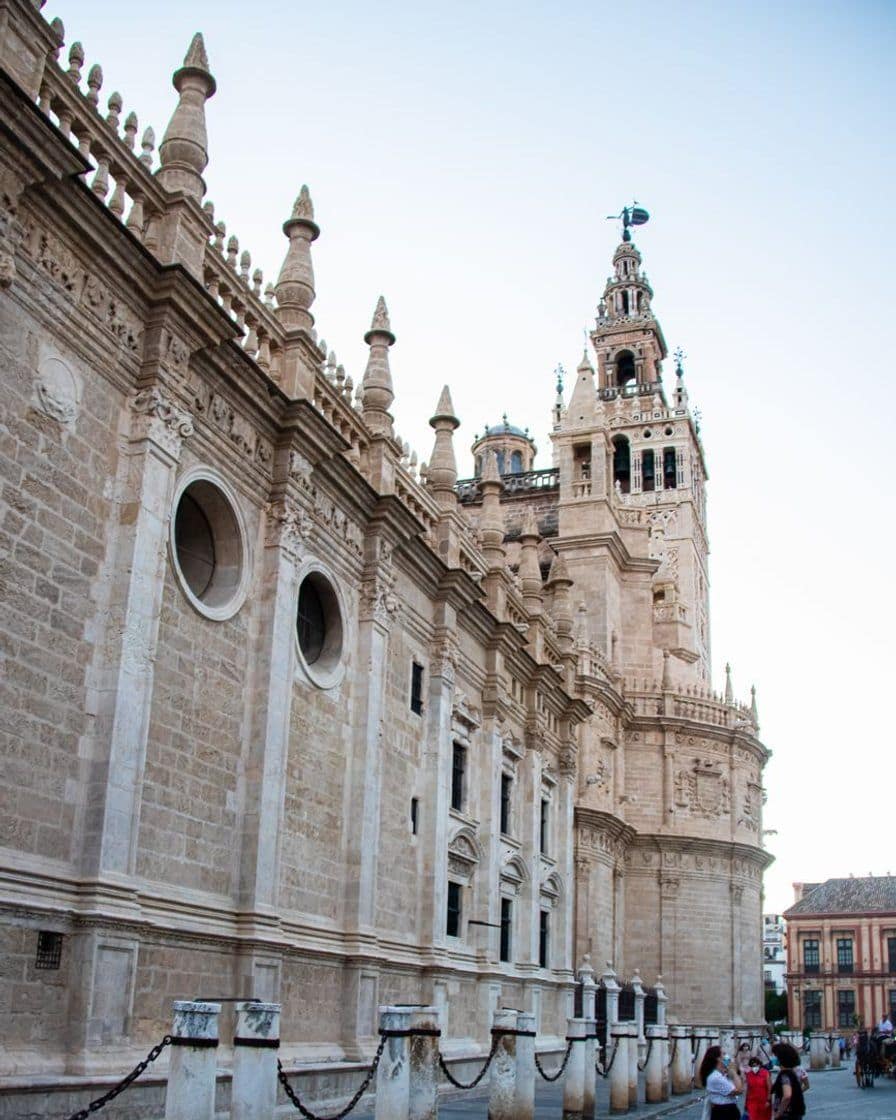
- The cathedral: the most recognisable backdrop, and the most crowded at the hour of the official route.
- The Madrugá: the small hours of Good Friday give the most iconic images, with departures between 0:00 and 3:00 and returns between 7:00 and 13:00, and the densest crowds of the year.
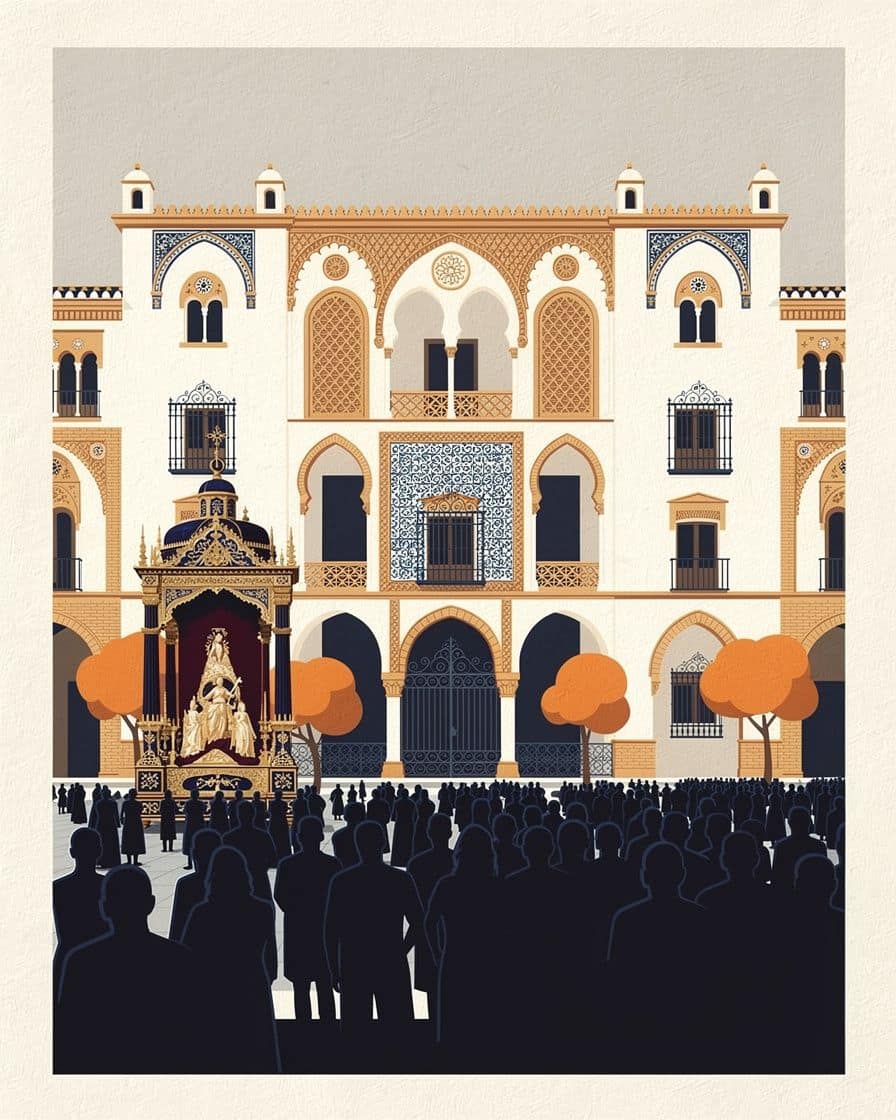
What time is worth going out to shoot?
No source publishes a curve of crowds by hour. What follows is deduced from the structure of each day and from the levels of crowding reported in the press:
| Time slot | Crowd | For the photo |
|---|---|---|
| Morning, Holy Monday to Wednesday | low to medium | churches, preparations, neighbourhoods |
| Early afternoon | medium to high | first departures, harsh light |
| Late afternoon | high | the best light, departures and narrow streets |
| Night | very high | floats lit by their candles |
| Madrugá | extreme | the best-known images |
| Easter Sunday | variable | a daytime procession, less pressure |
The centre becomes gridlocked from 19:00 onwards according to local guides. The best compromise is usually the brotherhood's own neighbourhood in the late afternoon, before the procession reaches the centre.
Knowing which brotherhood leaves which church, and when, is half a good photo. Guided tours on the brotherhood theme in Seville go through the brotherhoods' neighbourhoods and explain the procession before it passes.
See guided tours and activities in Seville →Affiliate link: booking through it helps keep this guide going, and costs you nothing extra.Where can you stand without paying for a chair?
In the neighbourhoods the brotherhoods come from and on the lesser-known stretches of the route, where you can stay still without blocking the way. The worst places to photograph are right around the cathedral at peak time and the departures that already feature in every guide.
The official route has paid chairs and boxes that take up the pavements, with prices detailed in the 2026 chairs guide. The 2026 route guide names specific streets where you see the float up close.
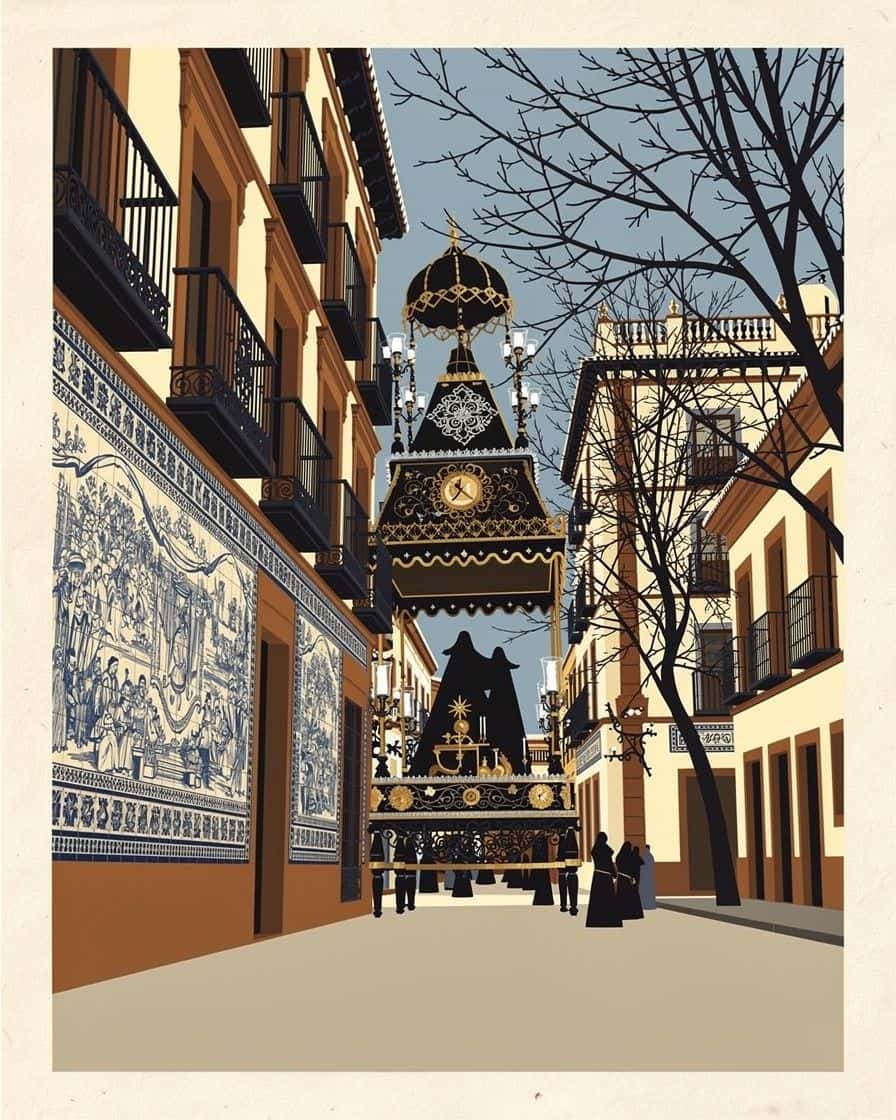
What makes the shot harder?
- Spots already taken: central positions are claimed hours before the float passes, and latecomers photograph shoulders and phones.
- Tripods: they get in the way of the flow of people and may not be allowed in a packed street.
- The light: departures are often backlit, and wax, rain and changing light make exposure unpredictable.
- Accredited photographers: press photographers have access the public does not, and it shows when you compare their photos with your own.
- Folding stools: in 2026 some 300 folding stools were confiscated in the most crowded areas.
No institution publishes a guide to photography restrictions by street or by brotherhood. The rule every source repeats applies to anyone with a camera too: do not cut through the procession or chase it through the crowd.
Late afternoon and night photos are easier when you do not depend on the last bus. Accommodation in the centre or near your brotherhood's neighbourhood lets you walk back in the small hours and download your memory card.
See places to stay for the Holy Week dates →Affiliate link: booking through it helps keep this guide going, and costs you nothing extra.What is already known about Holy Week 2027?
The dates: from 21 to 28 March 2027. The brotherhood-by-brotherhood timings are not published as of September 2026; they usually come out during the preceding winter, so any photo plan still has to work from the 2026 times.
The Council of Brotherhoods approved a line-up for the week that includes El Carmen, La Sed, San Bernardo, El Buen Fin, La Lanzada, Las Siete Palabras, the Cristo de Burgos, El Baratillo and Los Panaderos. A private listings site announces for Palm Sunday nine processions, with departures around 12:30, 14:00, 14:30 and 17:30, on a provisional basis.
And the best marches to go with the photos?
There is no official ranking of processional marches. The top twenty lists are editorial selections, which depend on the brotherhood and the band.
If you are after the sound of a particular day, the reliable approach is to listen to the band that accompanies the brotherhood you plan to photograph. The guide to following Holy Week remotely gathers the radio stations and maps that broadcast it.
Still unpublished
- A ranking of the best photo spots, with their light and crowd level.
- The photography rules of each brotherhood or each stretch.
- The 2027 timings, which the Council publishes in winter.
- A curve of crowds by hour, for any day.
To plan the whole trip, the general guide to Holy Week in Seville gives dates, timings and figures.
Outside Holy Week, the brotherhood churches can be photographed without a crowd. A good plan if you want to see the floats and altarpieces at your own pace.
Compare places to stay in Seville →Affiliate link: booking through it helps keep this guide going, and costs you nothing extra.Sources
- Visita Sevilla: Holy Week in Seville, 9 February 2026, and 2026 guide (PDF).
- Consejo General de Hermandades y Cofradías de Sevilla (General Council of Brotherhoods): configuration of Holy Week approved by the Council.
- Pixidia: Holy Week in Seville 2027, 10 July 2026.
- Programacionsemanasanta.com: provisional Palm Sunday listings, consulted in September 2026.
- Idealista (17 March 2026) and Andalucía Información (16 March 2026): 2026 days and routes.
- Seville City Council: brotherhoods by day, 9 April 2024.
The time slots are a reading of the structure of each day, not an official measurement.
Frequently asked questions
When is the best time to photograph Holy Week in Seville?
Can you use a tripod at the Seville processions?
When will the 2027 timings be known?
Is there an official ranking of the best Holy Week marches?
Álvaro Pineda
Álvaro worked for seven years as a guide at the Alcázar before he started writing. He walks his itineraries with a stopwatch and cuts whatever does not fit into a real day. He would rather say a monument is not worth it than pad out a list.