Park and ride in Seville: where the car parks are and what they cost
Seville talks about park-and-ride car parks, but publishes neither a list nor their rates. Here is what is known about each one, with year and source, and what is still unpublished.
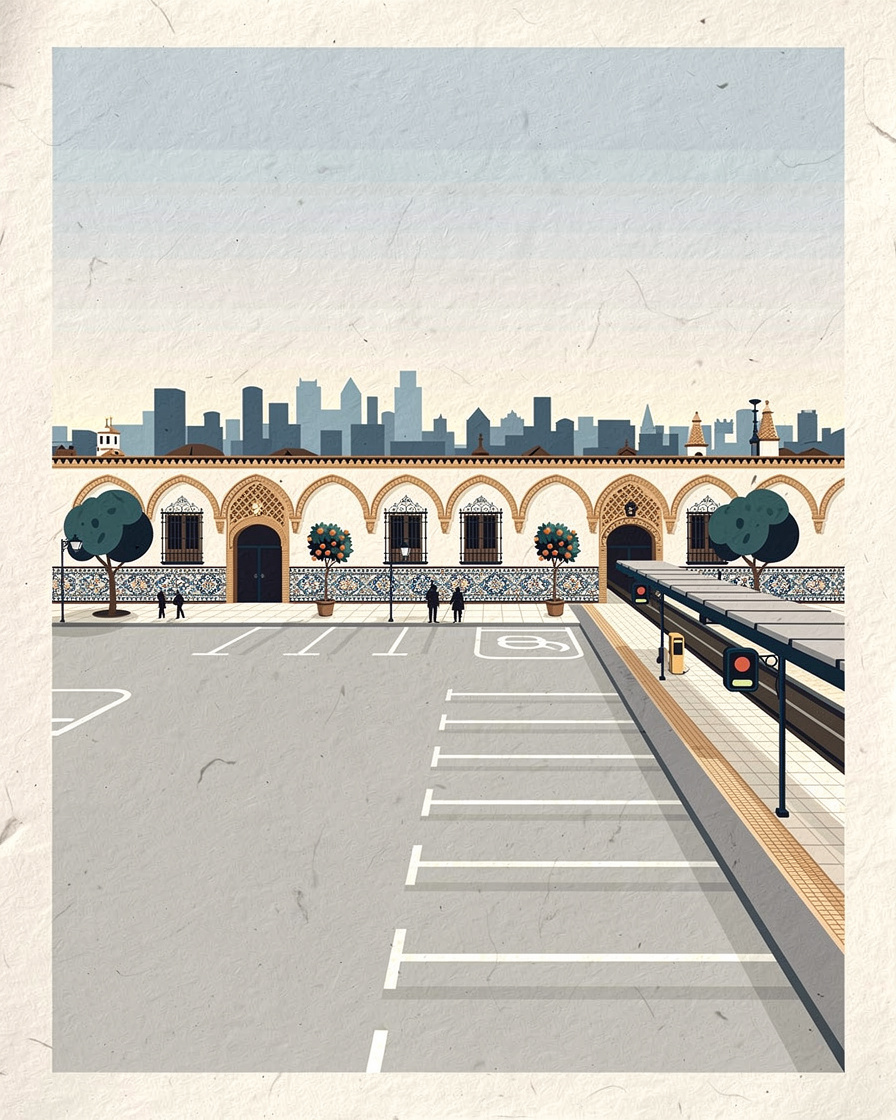
Looking for Seville's park-and-ride car parks is a revealing exercise: there is no official list, no map, and the rates of the two most cited ones have not been publicly updated for years. The system exists more as a talking point than as a network.
It matters if you are driving in with a hire car, from the airport or from elsewhere in Andalusia. This page brings together what is documented, with its year and source, and marks precisely where the information runs out. That boundary is itself the most useful piece of data.
Each pin is a named car park on OpenStreetMap. Tap it, then Go: the route opens in driving mode.
Three different things under the same name
Before comparing prices, it helps to know that "aparcamiento disuasorio" (park and ride) covers three different things in Seville that do not work the same way.
- Interchange car parks, designed for leaving the car and taking the metro or bus. El Prado is the reference case, and Blas Infante is opened as one during Holy Week.
- Public car parks converted on very busy days: Plaza de Armas and other municipal car parks that switch to short-stay pricing.
- New projects designed specifically as park and ride, such as Torreblanca, linked to the tranvibús to Plaza del Duque.
The difference matters because only the first kind is next to a transport stop. A cheap car park twenty minutes' walk from the nearest station deters nobody.
Each car park and its published data, with the year
| Car park | Published data | Year |
|---|---|---|
| El Prado interchange (TUSSAM) | €0.75 an hour, capped at €9 a day and €3 a night | 2015 |
| Plaza de Armas, Holy Week and Feria rate | €1.20 an hour, capped at €8.30 a day | 2009 |
| Torreblanca, tranvibús | 212 car spaces, six of them accessible, 27 for motorbikes and 16 for bicycles | 2026 |
| Blas Infante, during Holy Week | Opened as park and ride, no published rate | 2025 |
The first two figures are old, and we publish them precisely for that reason: they are the only per-car-park rates anyone has ever published. Treating them as today's price would be a mistake, and so would ignoring them.
The contrast with Torreblanca says a lot. The project's surface area, its number of spaces and even how many are for bicycles are known, but not its price or its opening hours.
How much does it really cost to leave the car outside the centre?
With no official price list, you have to work with ranges, and say so clearly. The municipal interchanges charge around €0.75 to €1.20 an hour, with daily caps of €8 to €9 in the published references.
Municipal car parks in general now charge between €7.50 and €12 a day, and those in the centre reach between €15 and €25. The difference between parking outside and parking inside is a few euros a day, not an order of magnitude.
That is the underlying problem. The council talks about "deterrent" pricing, but without a combined parking and transport price, the real incentive is weak. No document consulted describes a joint pass.
Before wrestling with the car, a quick sum: three days of park and ride plus return tickets for two people come to around €40. That money, added to your accommodation budget, is often enough to move from a hotel on the outskirts to one ten minutes' walk from the centre, where you no longer need the car.
Compare central places to stay on Booking.com →Affiliate link: booking through it helps keep this guide going, and costs you nothing extra.Holy Week: 1,200 spaces and no guarantee
For Holy Week, the council adds TUSSAM buses and opens 1,200 spaces of extra parking. It is the most concrete figure the city publishes on the subject.
What it does not publish is how full they get. There is no data on what time they fill up, and no public system warning in real time that a car park is already full.
Anyone who has tried knows the practical result: you drive to the announced car park, find it closed or full, and there is no plan B on offer. On a procession day, that is two hours lost.
How do you pay, and what should you have ready?
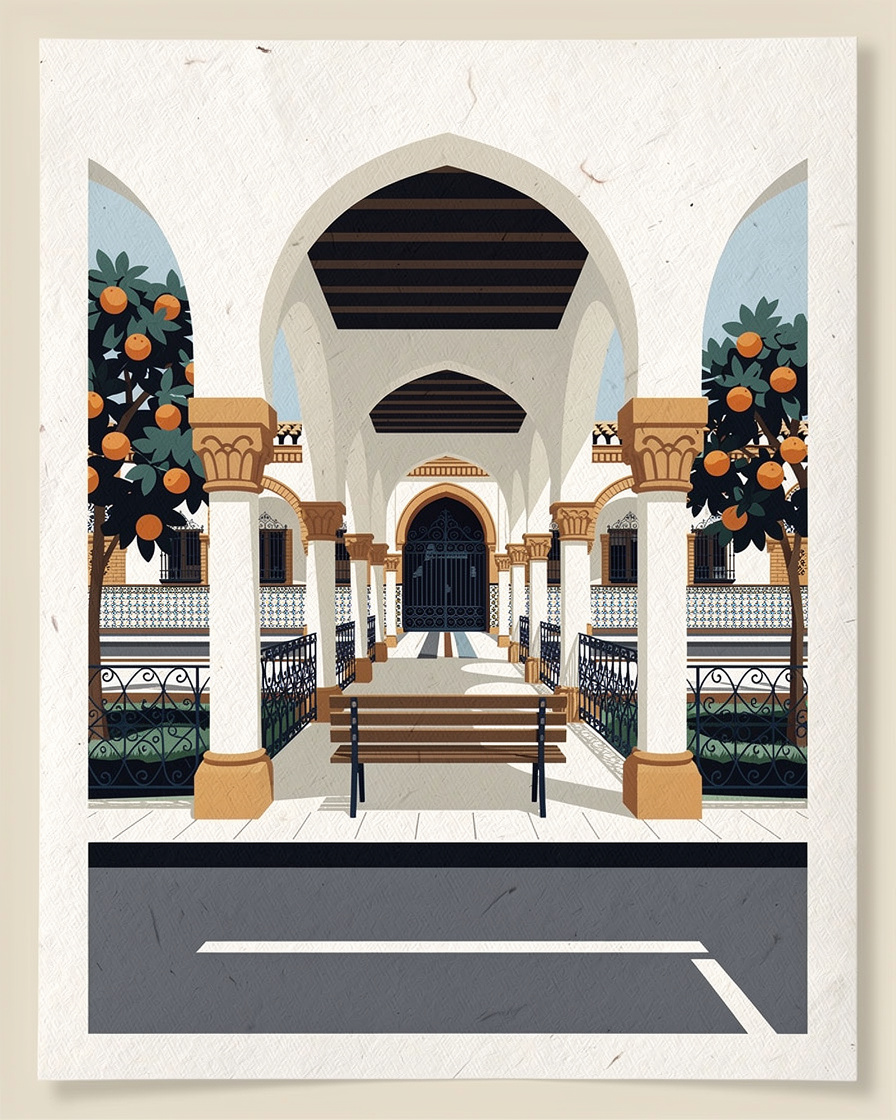
- Pay machines taking cash and bank cards in the public car parks. El Prado has two, one inside and one in the bus station.
- A ticket on the way in and payment on the way out in private car parks, which can be booked on platforms such as Parclick.
- A separate travel card. There is no combined ticket: you pay for parking on one side and the journey on the other.
- The temporary Holy Week car parks may work differently, but the council documents do not say how you pay.
Bring an international bank card. It is the method that does appear in the listings of both public and private car parks, and the one least likely to cause surprises.
The gaps, point by point
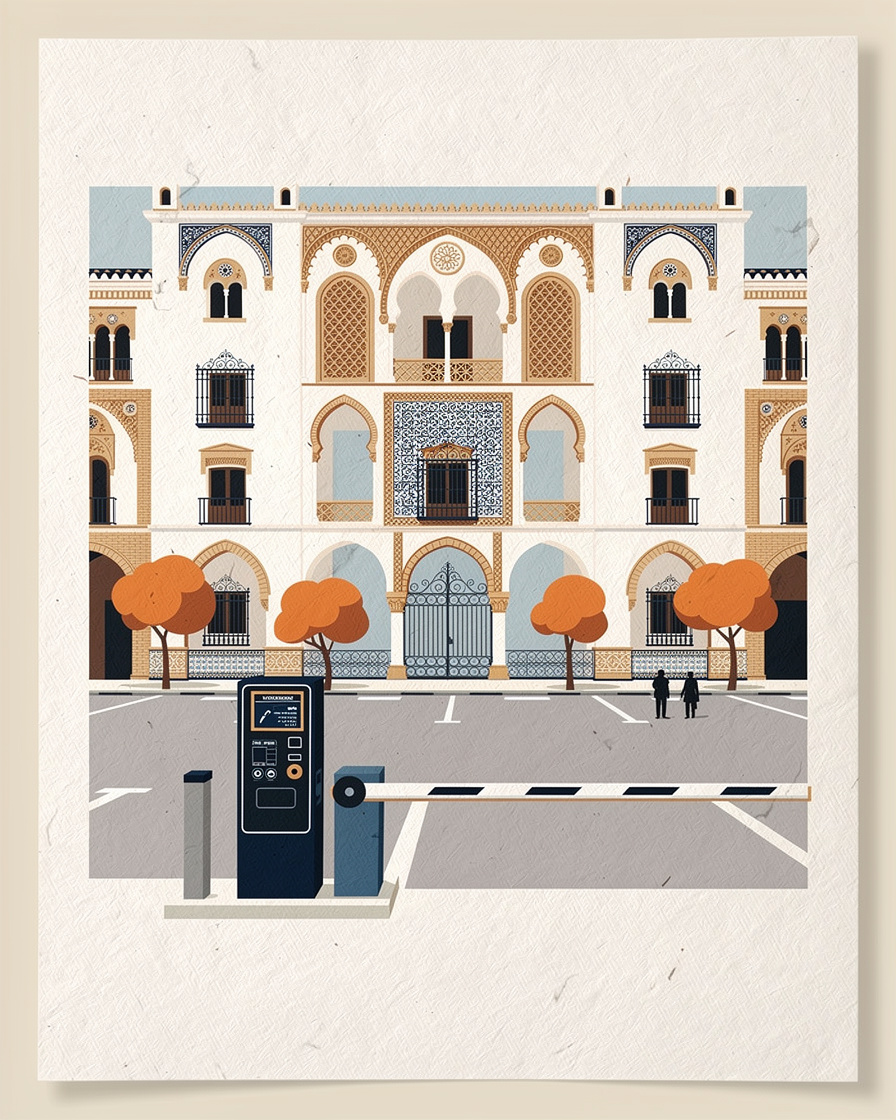
On a subject where the city says a lot and publishes little, it pays to be explicit about the gaps.
- The rates at Blas Infante and Torreblanca. The opening and the capacity are announced, not the price.
- Opening and closing times car park by car park. For the interchange, you can infer that it follows the metro and its bus line, but it is not written down.
- Detailed accessibility. Only Torreblanca gives a number of accessible spaces. For the others there is no count, and no accessible route to the stop.
- Usage data. No public statistic says whether these car parks do their job or are simply more car parks.
- A combined pass for parking and transport. There is talk of deterrence with no fare tool to produce it.
If the car turns out to be unnecessary, here are the metro, tram and bus fares and the maps worth downloading. If it stays, read the rules of the blue, green and MAR zones, and place the distances on the map of the centre and its districts.
The honest conclusion for Holy Week: with the old town closed for days and no real-time information on the park-and-ride car parks, the car goes from convenience to burden. Anyone who can arrive by plane or train and sleep inside the closed area avoids the whole problem.
See places available for the peak dates →Affiliate link: booking through it helps keep this guide going, and costs you nothing extra.Sources
- Seville City Council, sevilla.org: Holy Week 2026 special mobility plan and 2024 traffic and transport file, which mentions deterrent pricing without a price list.
- Europa Press: extra TUSSAM buses and the opening of 1,200 spaces (April 2025).
- Diario de Sevilla: opening of the El Prado interchange car park, Plaza de Armas Holy Week rates and ten municipal car parks with seven price lists (2026).
- El Correo de Andalucía: the Torreblanca tranvibús and park and ride (August 2026) and guide to parking during Holy Week (March 2026).
- Saba and Parclick: Seville car park listings.
- La Voz del Sur: Holy Week mobility plan.
This is an area where information comes out in one-off press releases and is never consolidated. This page is updated whenever a new per-car-park rate appears.
Frequently asked questions
Does Seville have a park-and-ride network?
How much does park and ride cost in Seville?
Is there a ticket that combines parking and public transport?
How many extra spaces does Seville provide for Holy Week?
Marta Bermúdez
Marta spent five years on the front desk of a hotel in the centre, answering the same questions about parking and the metro every day. She writes the pages she would have liked to hand to her guests. She checks every fare on the operator's website, never in a guidebook.